We use cookies on this website to improve user experience. By using our website, you consent to all cookies in accordance with our Cookie Policy
About Balfolk Stroud
History
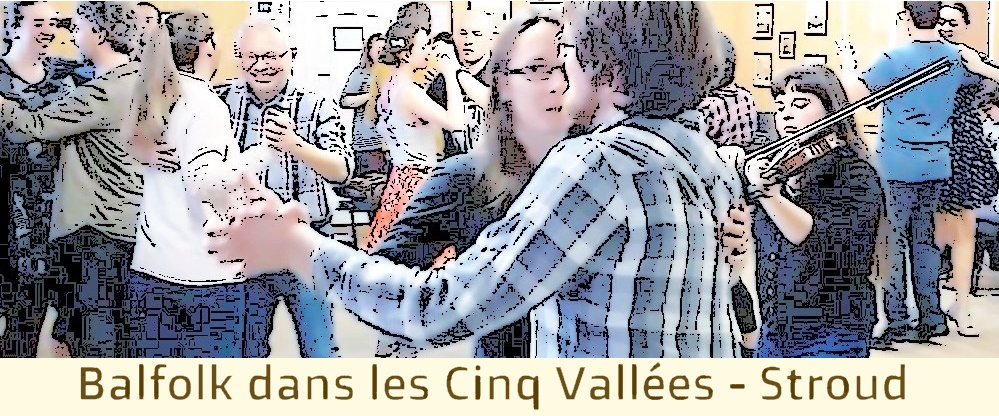
According to Wikipedia, Balfolk came from people becoming interested in dancing to folk music during the 1970s. Of course, a lot of the dances are much older than that. The music was mainly French, Breton and other European traditions. It was rarely a preserved art-form with recorded music and costumed performers. The "audience" went to dance to live music - and still does.
By the 1980s, it had spread to the UK although it was typically referred to as French, French and Breton or Euro. Another strand was dances from Sweden. At some point, perhaps early in the new millennium, the word Balfolk became more common in the UK and tended to encompass dances with origins in Western Europe although usually excluding dances from the British Isles.
Stroud
At some point possibly around 2000, the forerunner of "French Dance Stroud" started using the Lansdown. Hall in Stroud, (then known as "The Space") and eventually settled at Horsley Village Hall.
During that time, there was a turnover of organisers and after the Covid-19 pandemic, there was some delay starting up again and a fresh team (Balfolk Stroud) started planning and putting on events in the Trinity Rooms.
Today (2024), French Dance Stroud and Balfolk Stroud both put on their own dance events but share a committee member. They're all high quality dances although they each have their own "vibe". We suggest you try both!
For more on our events both future and past, see here
Note about some of the words you'll see on this site
Balfolk events are generally called Bals (not Balls) and are sometimes qualified as a Grand Bal or a Petit Bal (big or little). These are usually indoors whereas a Clandestine Mazurka (or Mazurka Klandestina in Italian) is often outdoors with random musicians. There's also Bal Miniscule which as the name implies, is smaller still but typically, takes place where Balfolk musicians are having a "session" and dancers turn up. See here